
Reframing Limiting Beliefs
through Perspective Lab
Personal Project
TEAM
Just Me!
TOOL
TIMELINE
2 Days
TL;DR
WHAT AI TOOLS GET WRONG
Most AI tools do the thinking for you. That's the opposite of how reframing works.
In CBT, reframing is the practice of examining a negative thought, finding the distortion in it, and arriving at a more balanced perspective. The cognitive effort is the mechanism, it's what builds the skill over time.
Most AI tools skip that step. You type a thought, the AI returns a better version. You feel better for a moment. But nothing changes in how you think next time.
| The problem isn't that AI can't reframe. It's that when AI does all the reframing, the user never learns to do it themselves.
INTRODUCING PERSPECTIVE LAB
Classify before responding.
The tool detects the thought pattern and scores how rigid the thinking is before generating anything. That score shapes the tone, depth, and number of reframes the user sees.
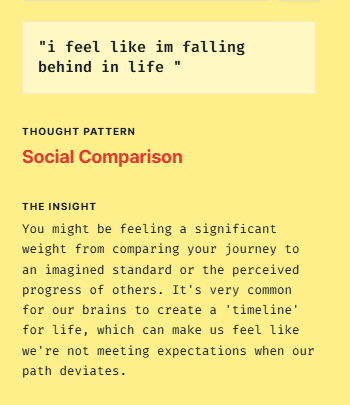
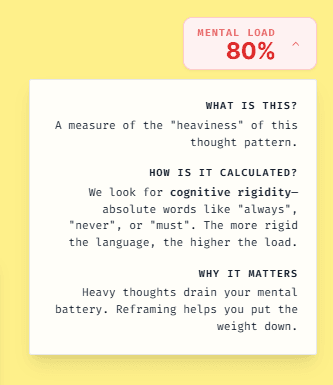
Separate understanding from reframing.
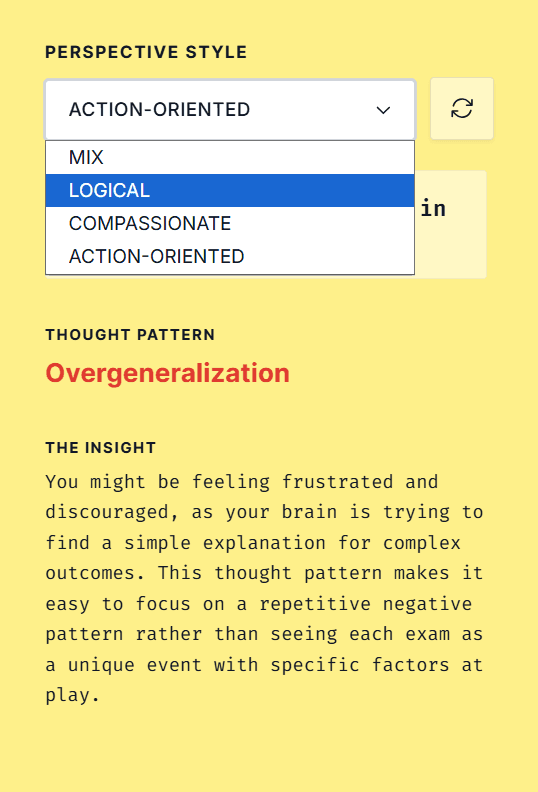
Most tools merge explanation and advice into one; Perspective Lab separates them, insight on the left (why you think this way), reframes on the right (how else to see it).
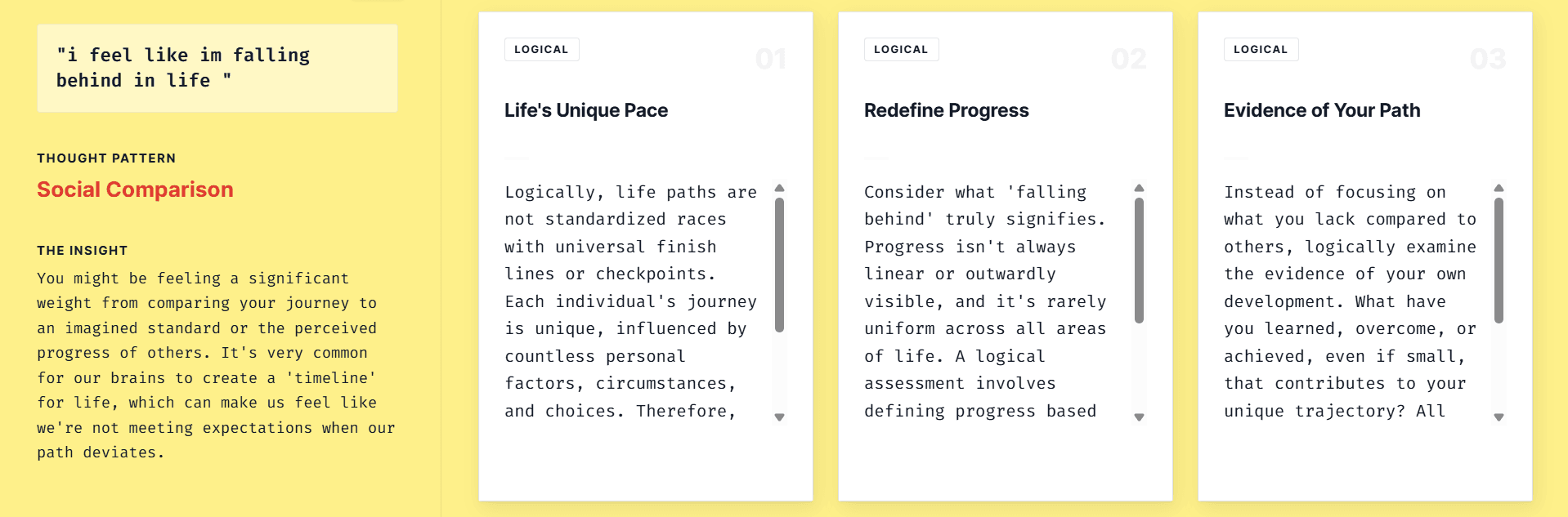
Multiple perspectives, not one best answer.
Three reframes, three angles on the same thought, never collapsed into one. The user sees all options and chooses what resonates.
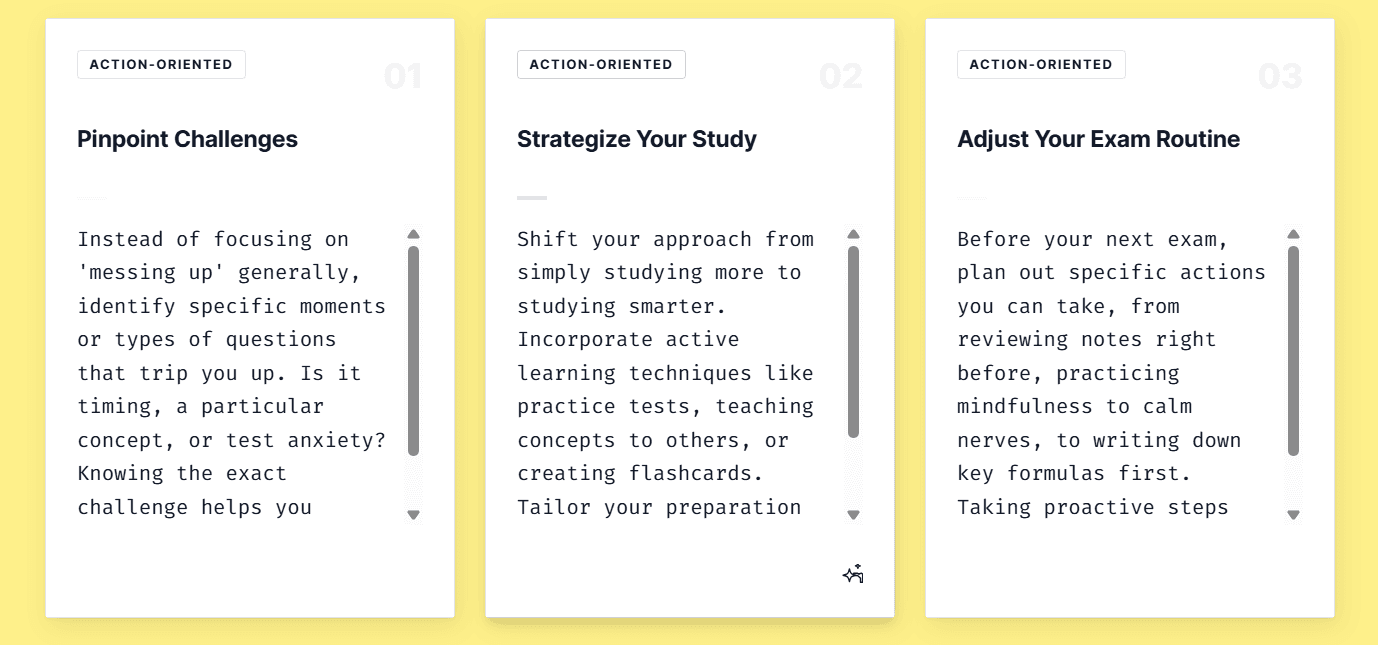
Let users change the lens.
The Perspective Style dropdown
regenerates reframes through different lenses,
Logical, Compassionate, Action-Oriented.
TRY THE TOOL
WHAT USERS SAID
I got 13 users to test out the tool & here's what they thought.
Most of the users said the reframes touched on both, the objective & subjective angles around the thoughts. Below are some feedback points I received.



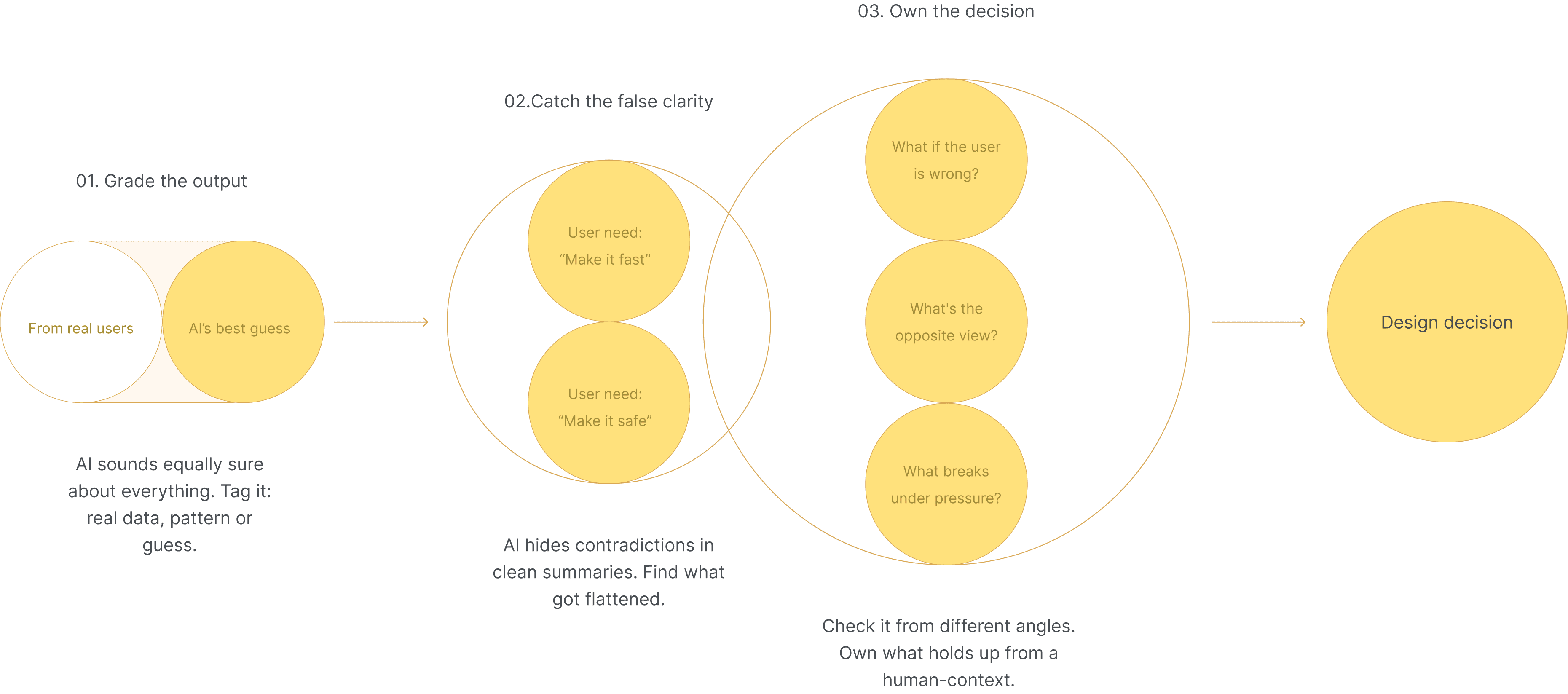
MY AI FRAMEWORK
Building this tool is where I formalized how I work with AI.
Every design decision in Perspective Lab maps to a principle I now apply across my work.
Read more
REFLECTION
What building this taught me.
On building it:
The classification logic took longer than the reframing. Figuring out what kind of thought someone is having is harder than generating a response to it.
On thinking about the AI reasoning:
AI works best with constraints. This tool made me think hard about what angles should & shouldn't touch while generating a reframe.
On the product:
The Insight panel was an afterthought. It became the thing users mentioned first. Feeling heard came first instead of practical reframes for users.