Startup Project
1 PM
1 Researcher
1 Founder + Designer (me!)
Behavioural Research
Interaction Design
Concept Validation
4 Weeks
TL;DR
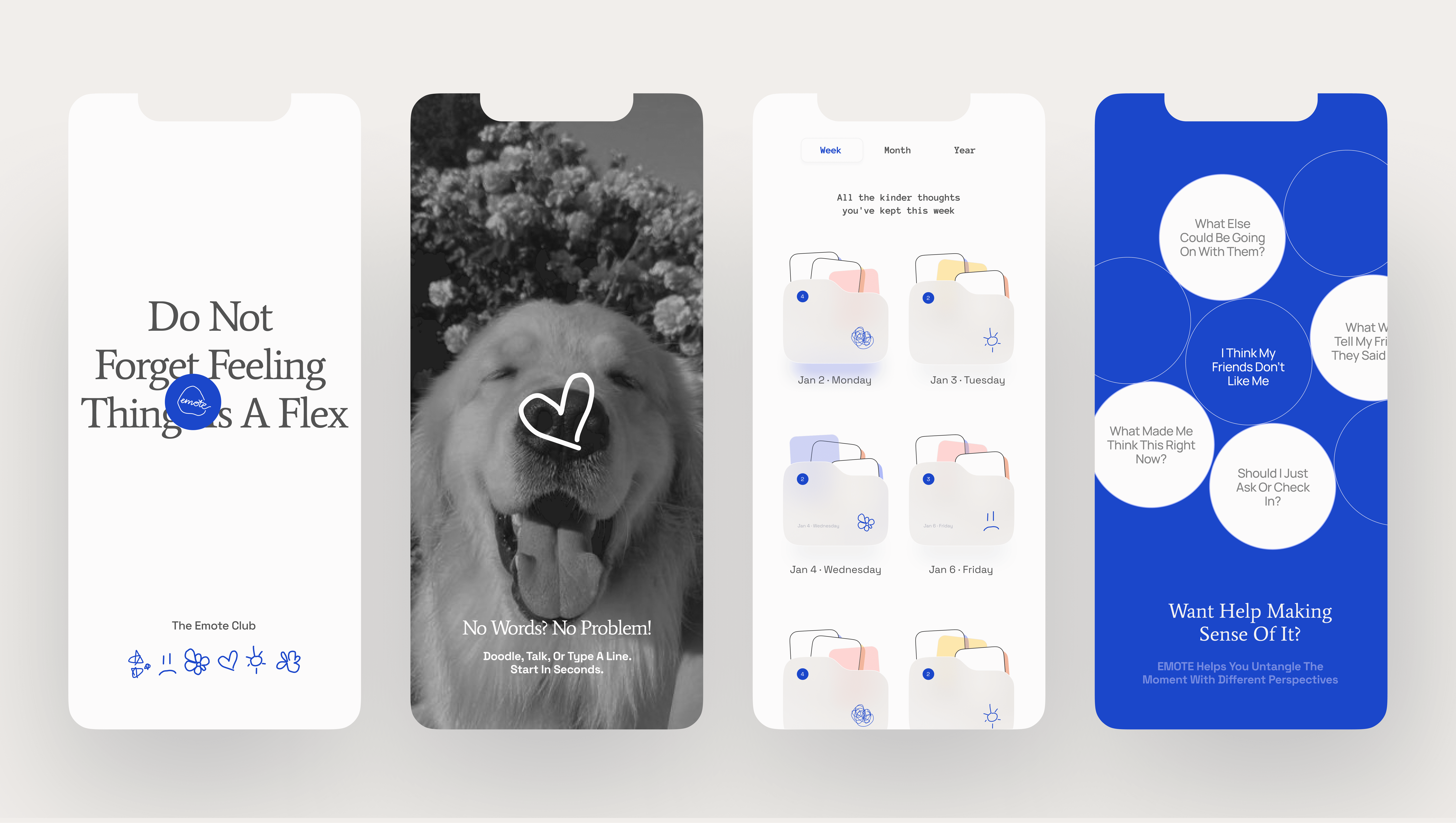
What: Designed an emotional care app for Gen Z that flips the usual sequence, you express first, reflect only if you want to. Built to work in the moments when people have the least mental capacity to "do" self-care.
Why: Every existing wellness tool asks you to think before you can feel better. That's the wrong order. The barrier wasn't that people didn't care about their mental health. It's that the tools demanded effort at exactly the wrong moment.
Outcome: Shipped a live prototype tested with 12 users over a week. 7 of 12 returned on day 7. Users reached their first expression in under 30 seconds, proving the core bet held.

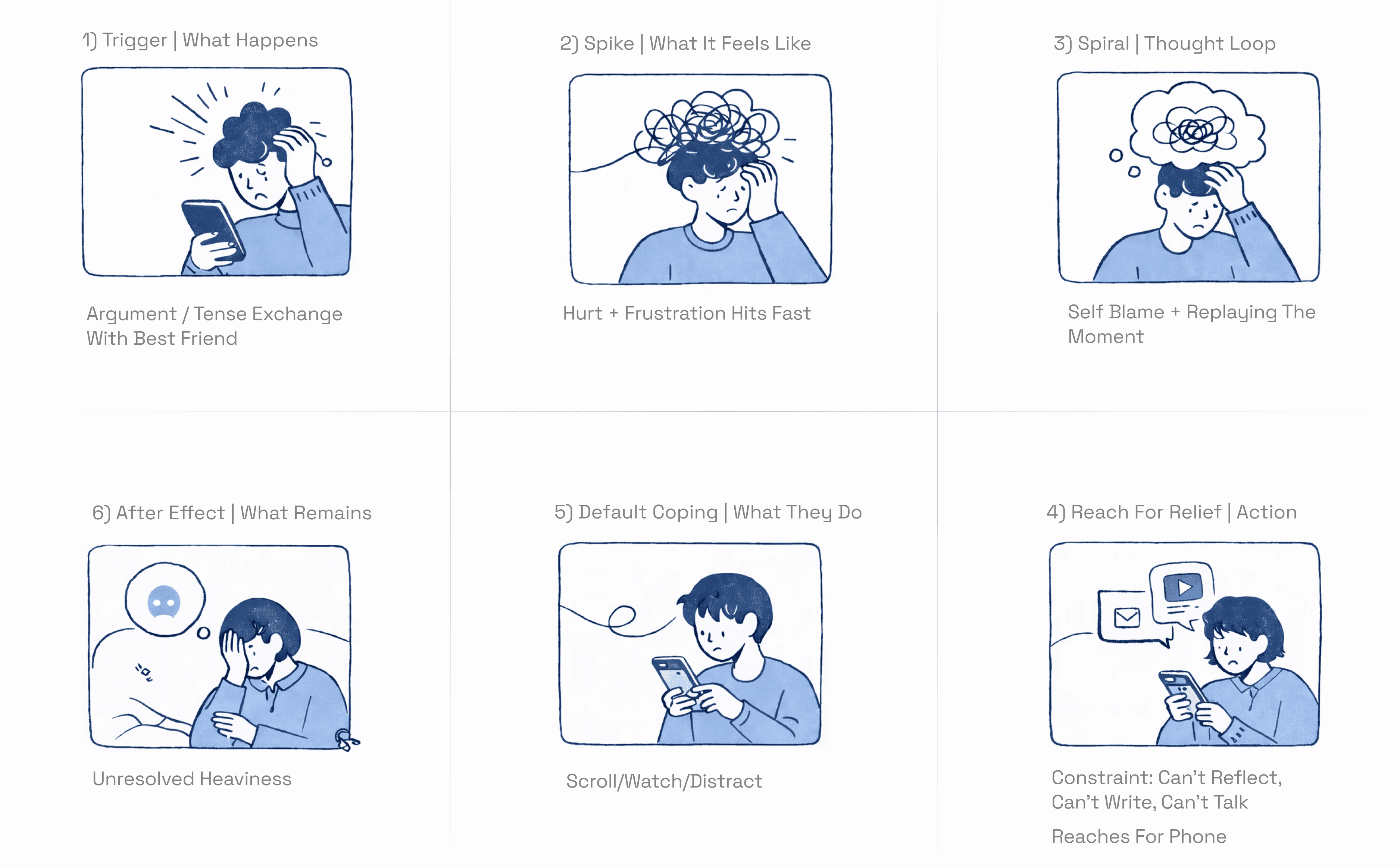
That quote came from a 21-year-old in one of my early interviews. Everyone in my age group who I spoke to described some version of the same pattern: feeling bad, knowing they should "do something," and reaching for their phone instead.
At 1:30am, Gen Z doesn't open a wellness app, they scroll.
What supports their emotional health now shapes the resilience of the generation that'll eventually lead everything else.
This project started with a narrower observation: the tools exist. People just don't reach for them in the moments they need them most.
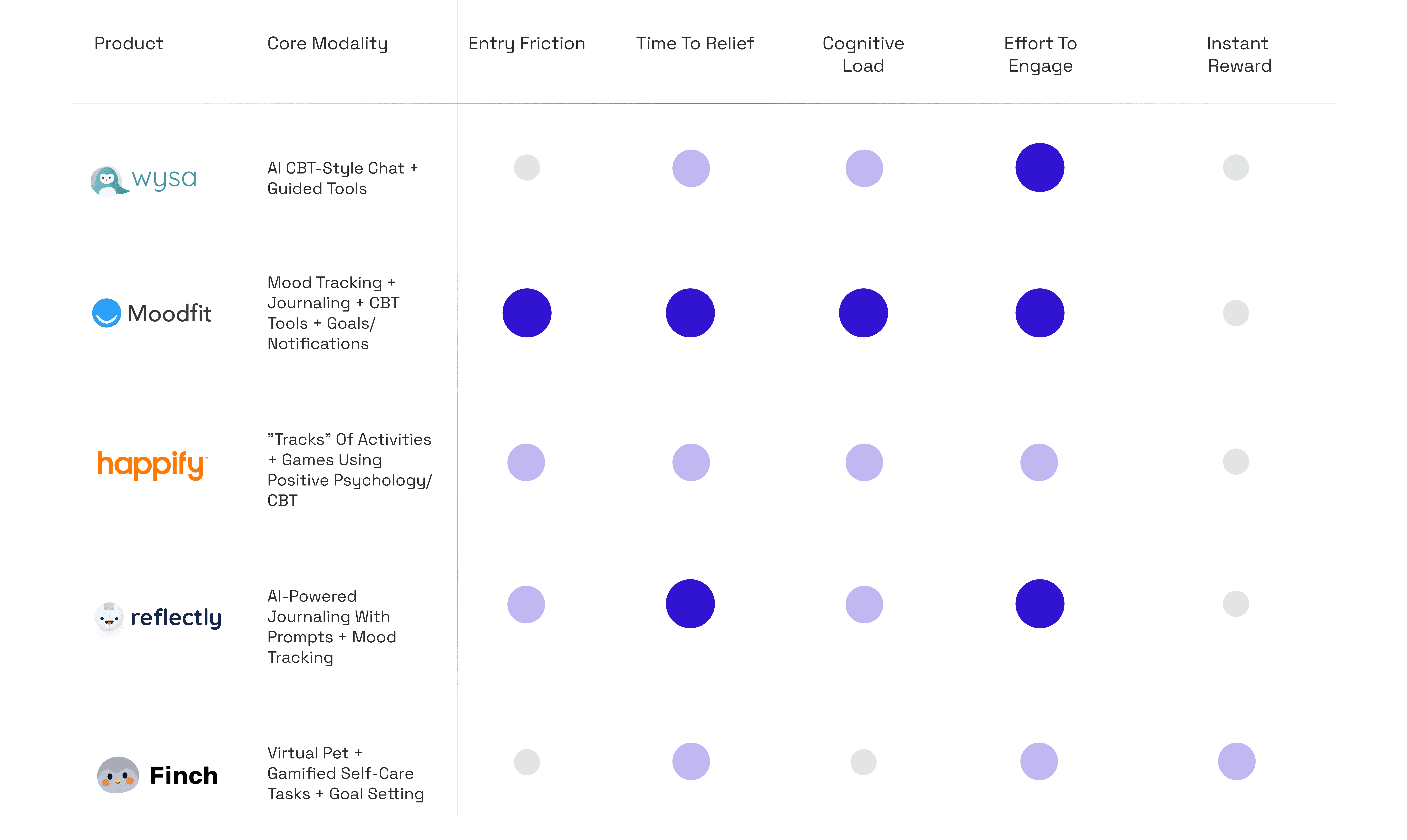
Emotional care is low-dopamine. Wysa, Reflectly, Finch, even the best still ask you to journal, chat, track, complete tasks.
TikTok & Instagram offer instant relief with zero effort. Wellness tools aren't bad. They're just competing against the most frictionless high-dopamine experiences ever designed. It's not a fair fight.
We believed this enough to build a research plan around it.

We ran a survey (n=67) and did ~20 interviews specifically because we needed to understand the situation and struggle that triggers a coping attempt.
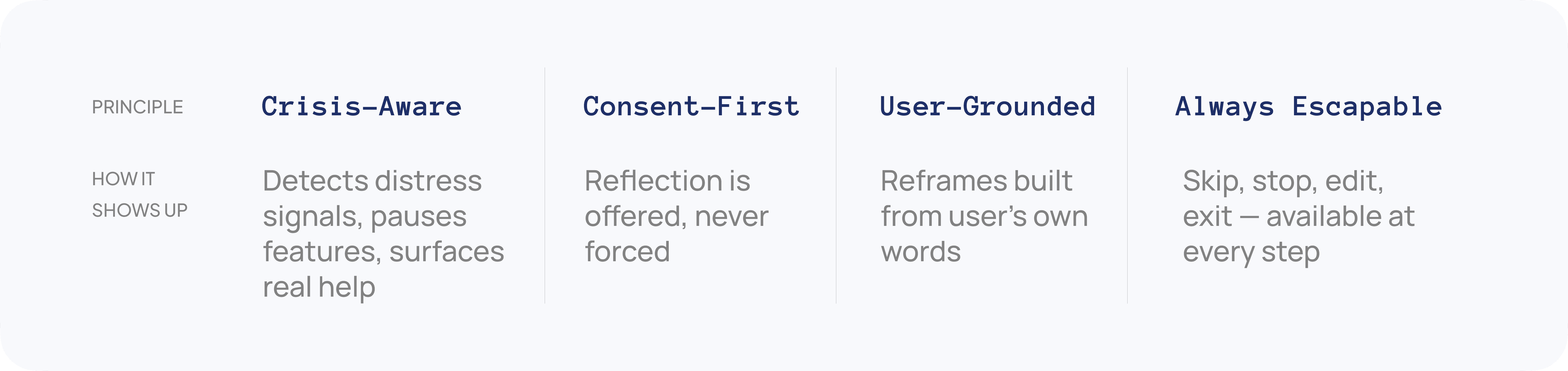
Four patterns kept surfacing:
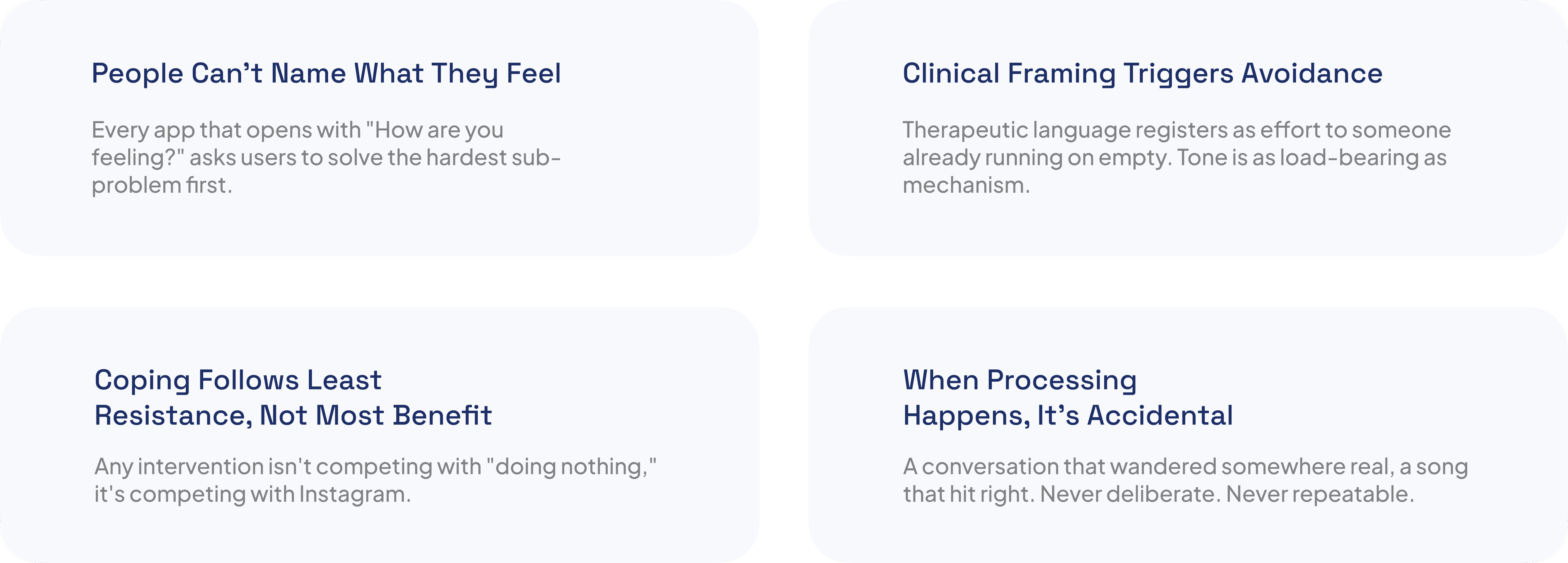
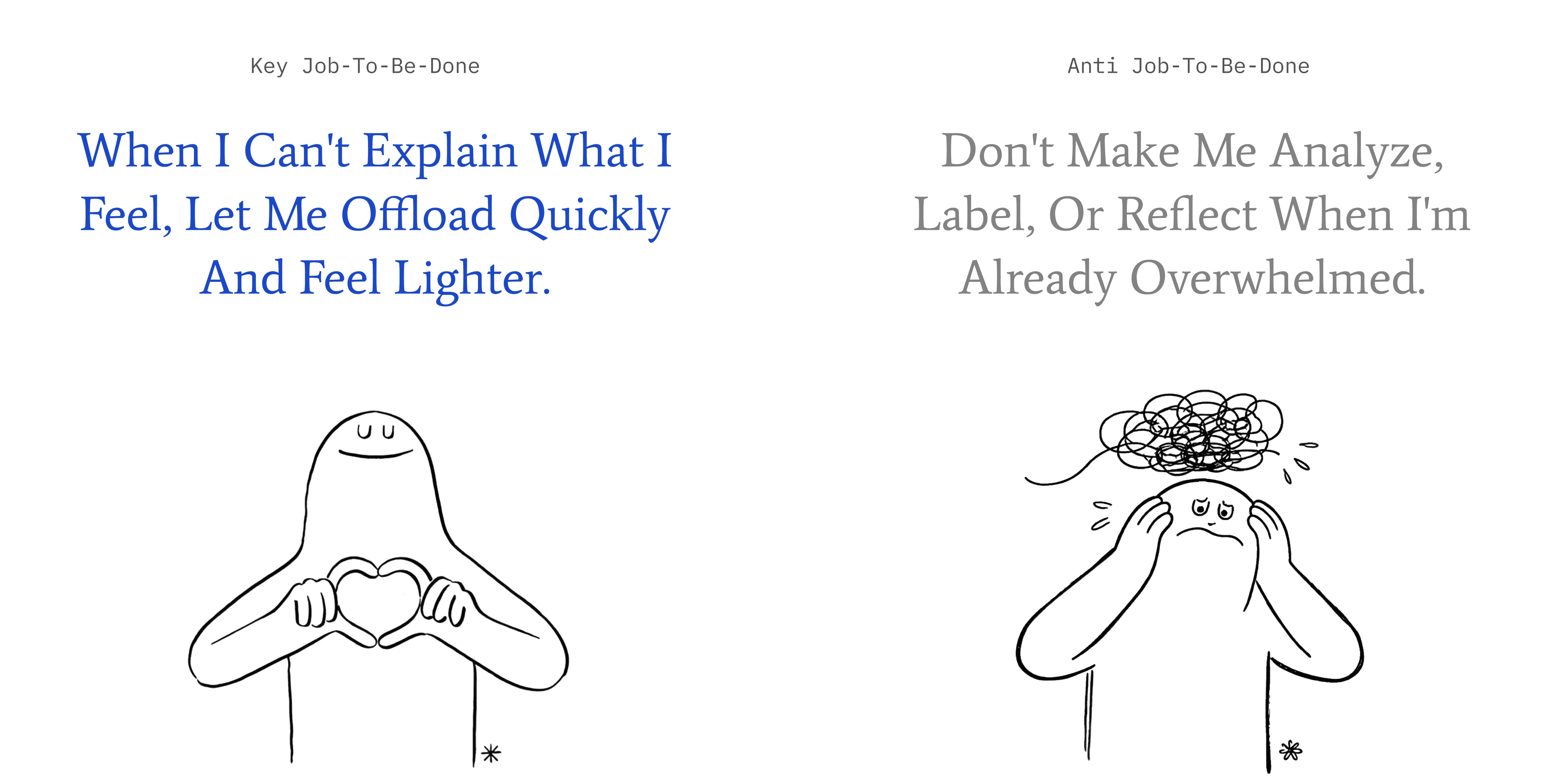
These principles set the non-negotiables for how the solution should be designed.
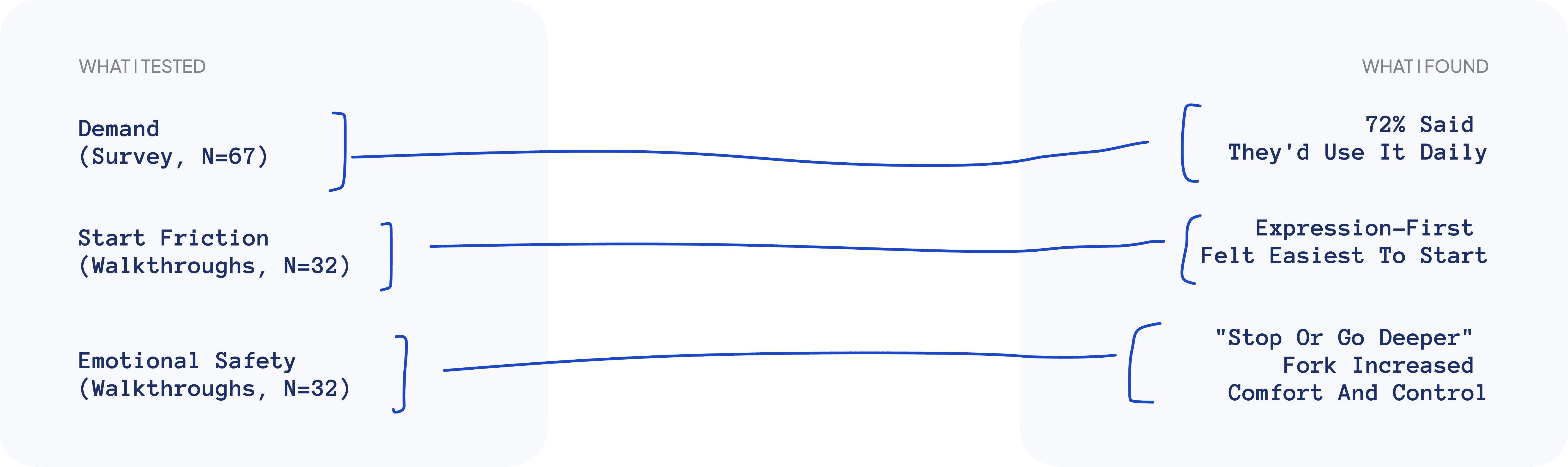
We tested three directions with 32 users to find which one people would actually start when overwhelmed.
EMOTION LOGS
Users said it felt like "just recording." Easy to do, nothing to show for it. Low effort, low payoff.
CBT PROMPTS
Users still called it "work." Naming feelings felt effortful, exactly the barrier we were trying to remove.
WORDLESS OFFLOADING
Users could "get it out" without explaining & felt delight. Only then did optional reflection feel safe.
| Processing and tracking both failed for the same reason: they asked users to think before they could feel lighter.
Expression was the only direction that delivered relief as step one, which meant it was the only one that worked at the moment of lowest capacity.
We committed to expression first, with depth only if users choose it.
Why: To avoid shallowness, we added optional reflection and a library for return moments.
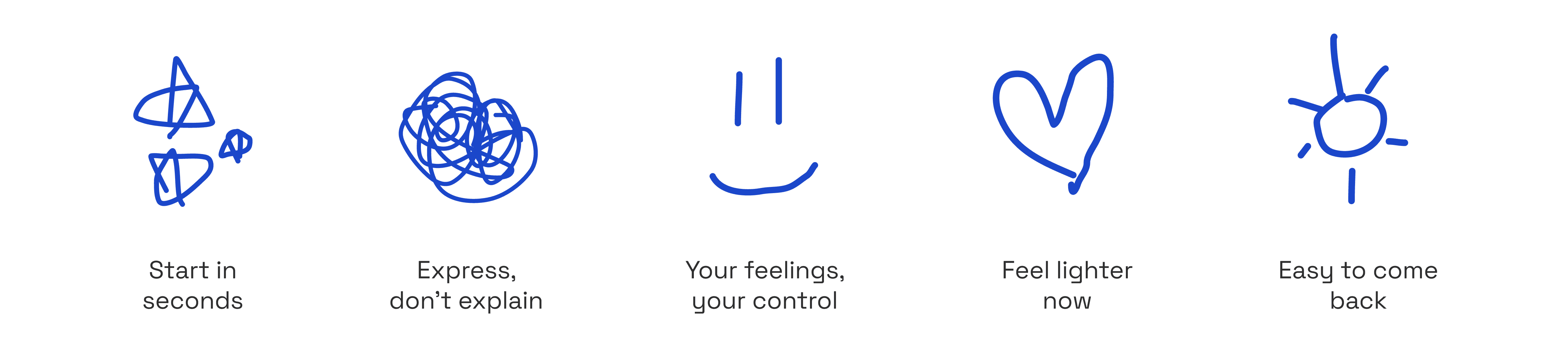
Emotional care redesigned for low-capacity moments. A loop that makes starting easier than scrolling, and returning easier than starting over.
The core loop:
Start → Offload → (Optional) Meaning → Save → Return
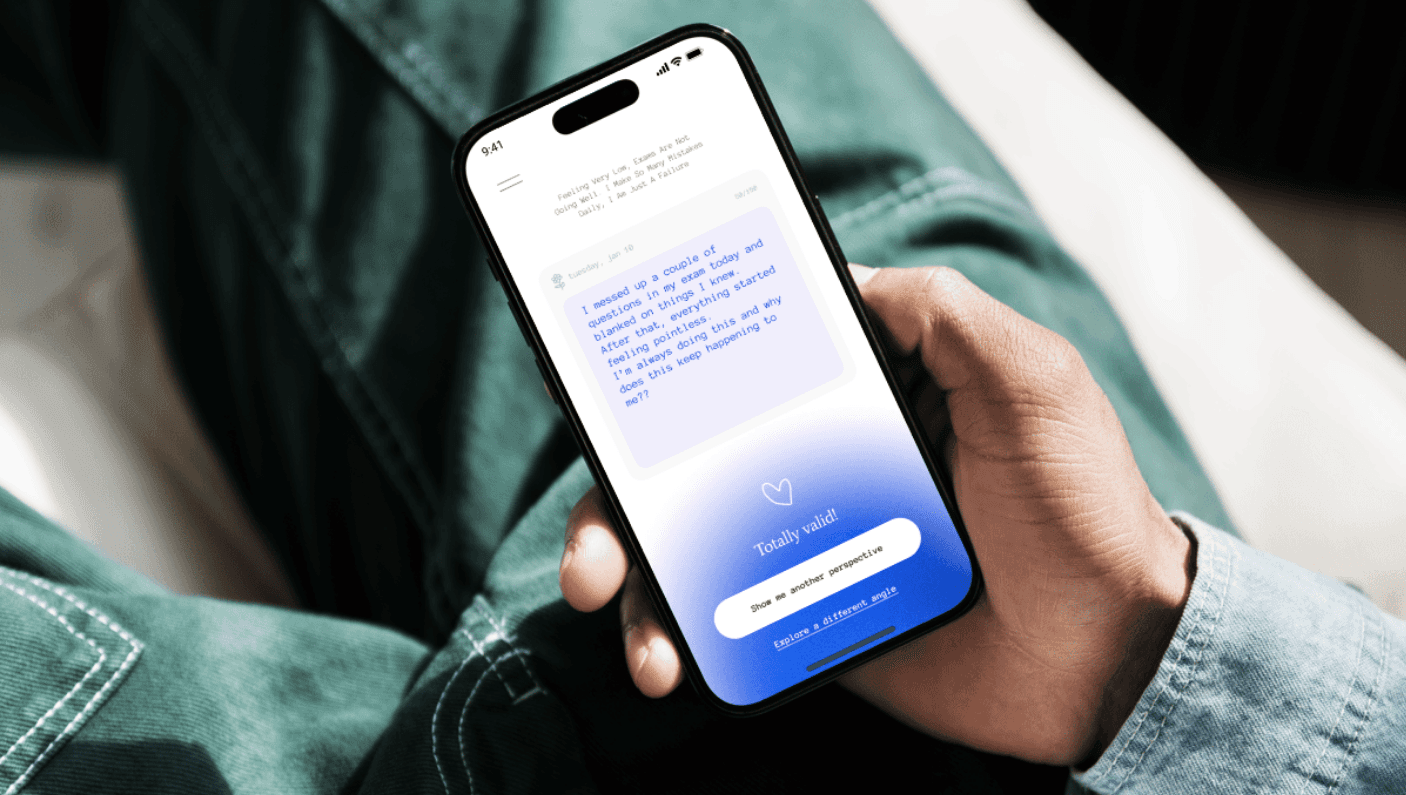
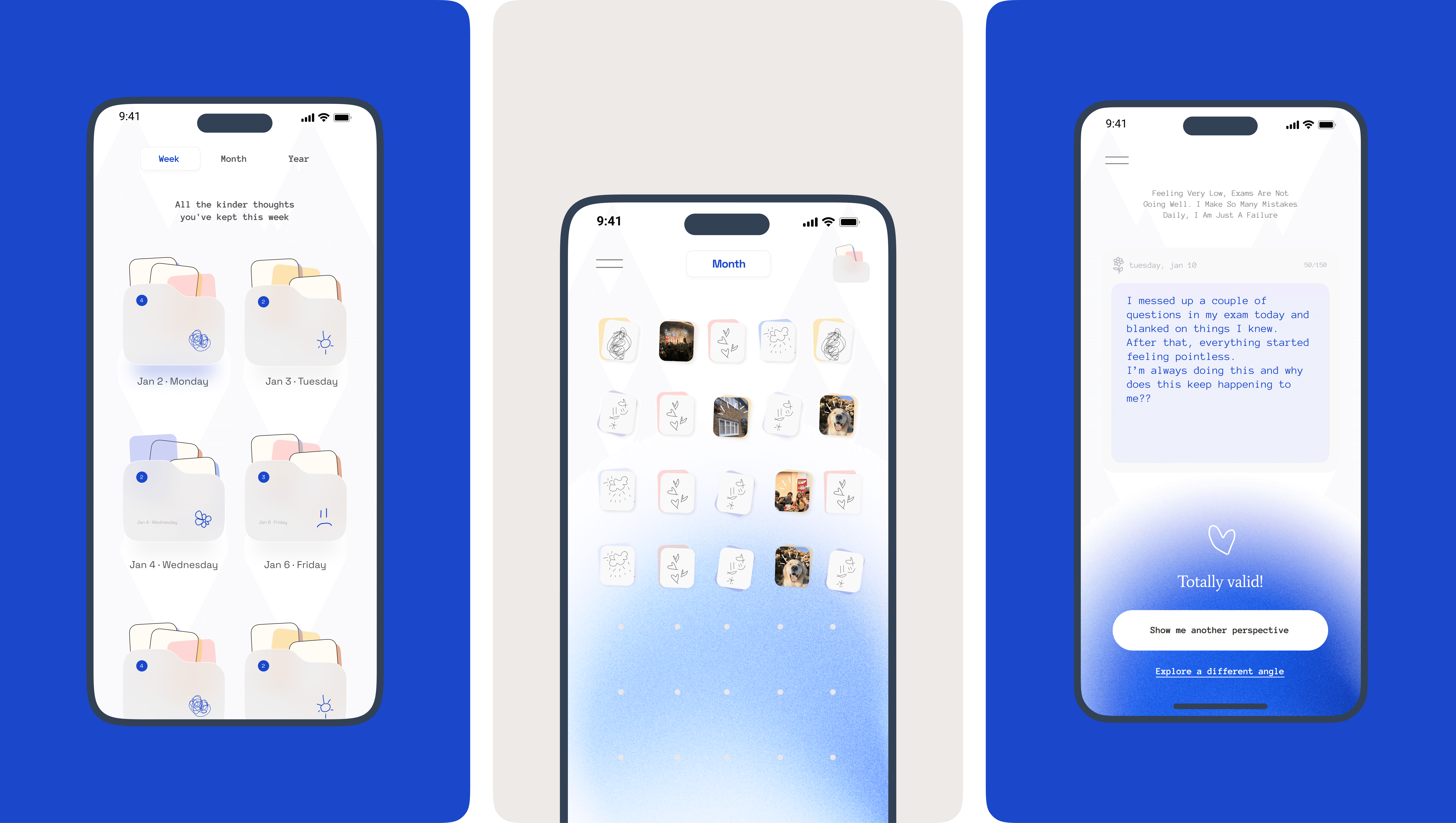
GenZ's coping happens on phones. The intervention had to live on the device they're already holding.
Release Features are at the core of Emote's experience.
After expressing themselves through a scribble or photo, users can fold, tear, crumple, or squeeze the paper.
| Design Decision: We introduced physical interaction so release could feel more embodied than polished.
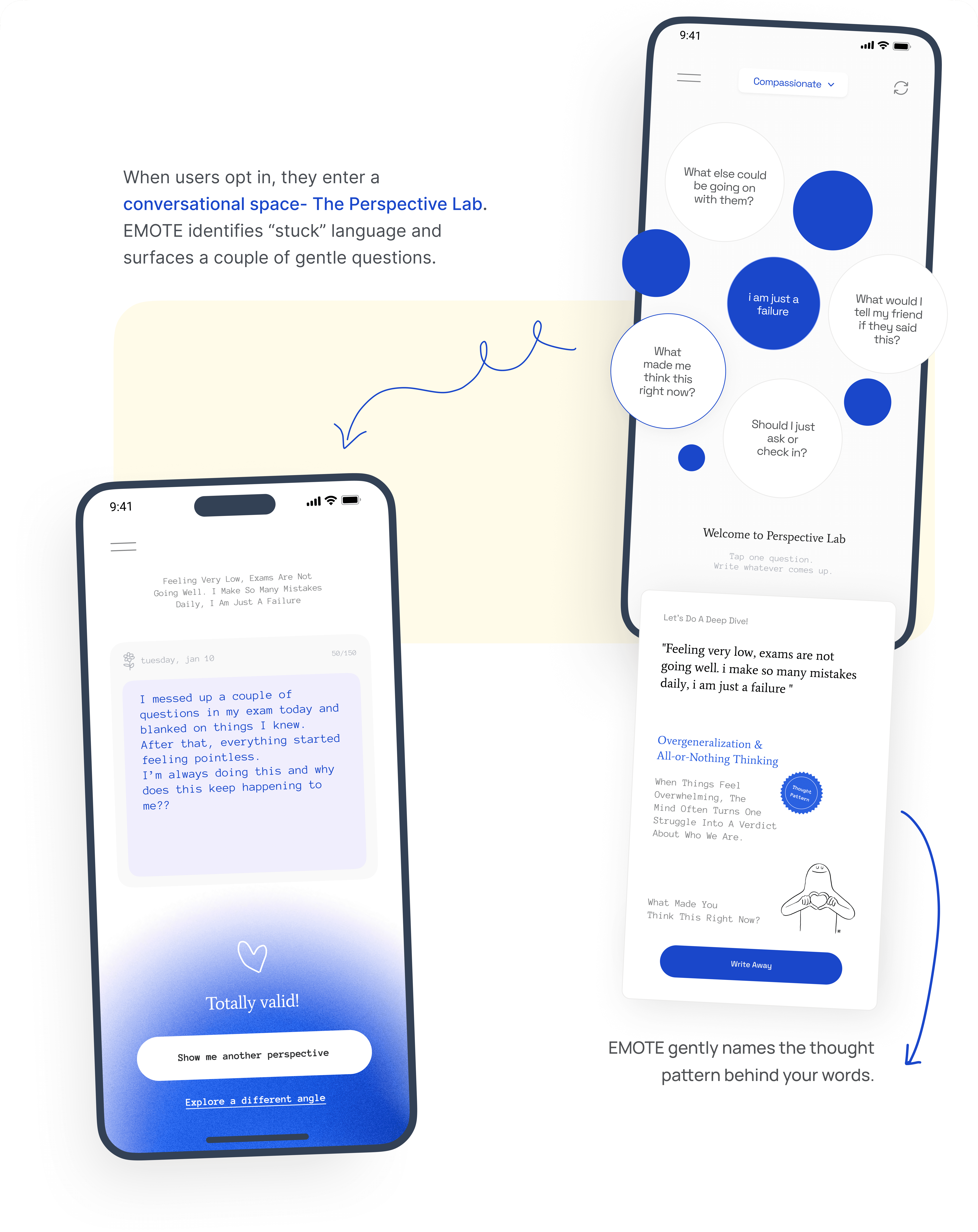
Reflection is offered,
never assumed.
After expression, EMOTE analyses the patterns in the user’s words and offers a gentle nudge for reflection.
| Design Decision: Reflection stays optional, so users can go deeper to process without feeling pushed.
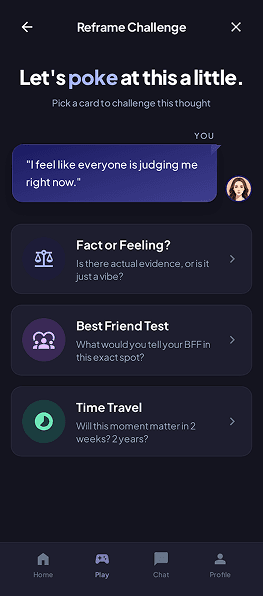
Reframes are earned, not generated.
Socratic prompts help users arrive at the reframe themselves which then AI polishes. Each one is tagged with its thinking lens, so CBT patterns are learned through use.
| Design Decision: I turned saving into a physical, visible act so it would feel like part of emotional processing,
The goal isn't to replace human support. It's to offer a lighter touch for the everyday moments that don't need a therapist, but still need something.
What I'd still need to prove:
72% said they'd use it daily, but intent doesn't equal behaviour. True habit formation would require a longer pilot with real usage data.
I got 12 users to test out EMOTE for a week. This wasnt a statistically sound study but it proved whether the core bet held up in real life.
7 of 12 users came back on day 7
~30 seconds
8 of 12 chose to "go deeper" after expressing
~2 minutes
3-4 saves per user across the week
8 of 12 users who completed an expression chose to enter Perspective Lab afterward.
I expected the Perspective Lab to be the retention driver. It wasn't. In exit interviews, users talked about wanting to "check on" their garden, to see what they'd planted. The garden became a quiet reason to come back.
3 of 10 users used EMOTE purely for expression. Never opened Perspective Lab. Never saved a reframe. But they came back 4+ times that week anyway. Offloading alone was enough value.
We focused on a Minimum Lovable Product, the smallest version that gets people to feel delight & relief. This helped us test 3 directions & ship fast.
I started this project designing for what users needed: better emotional processing tools. I should have been designing for how users arrive.